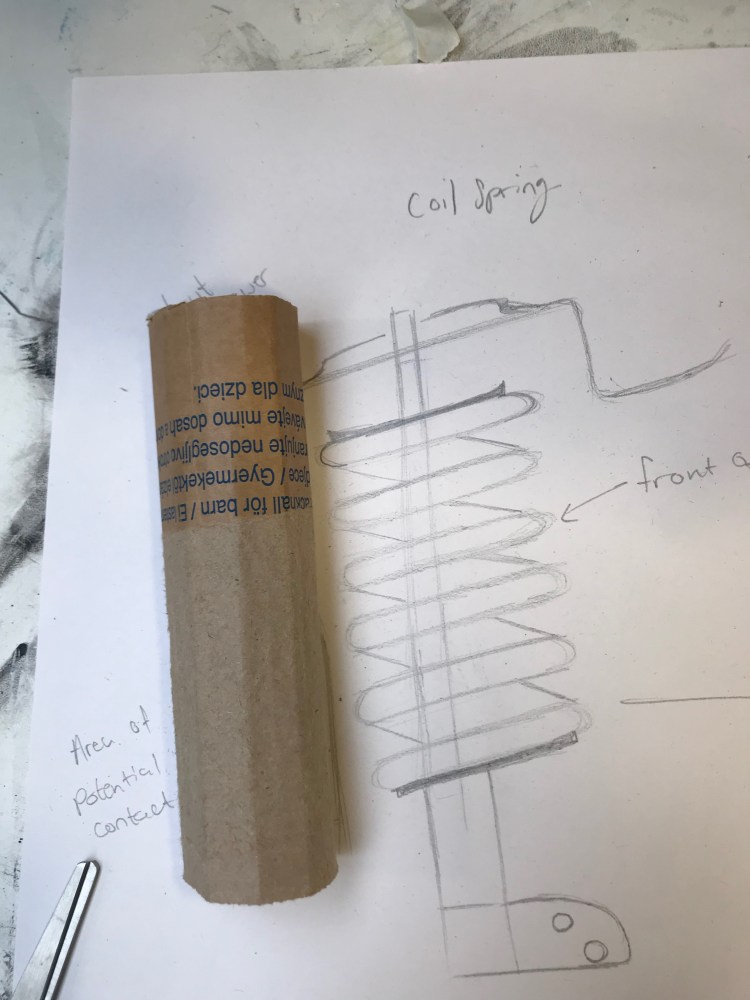
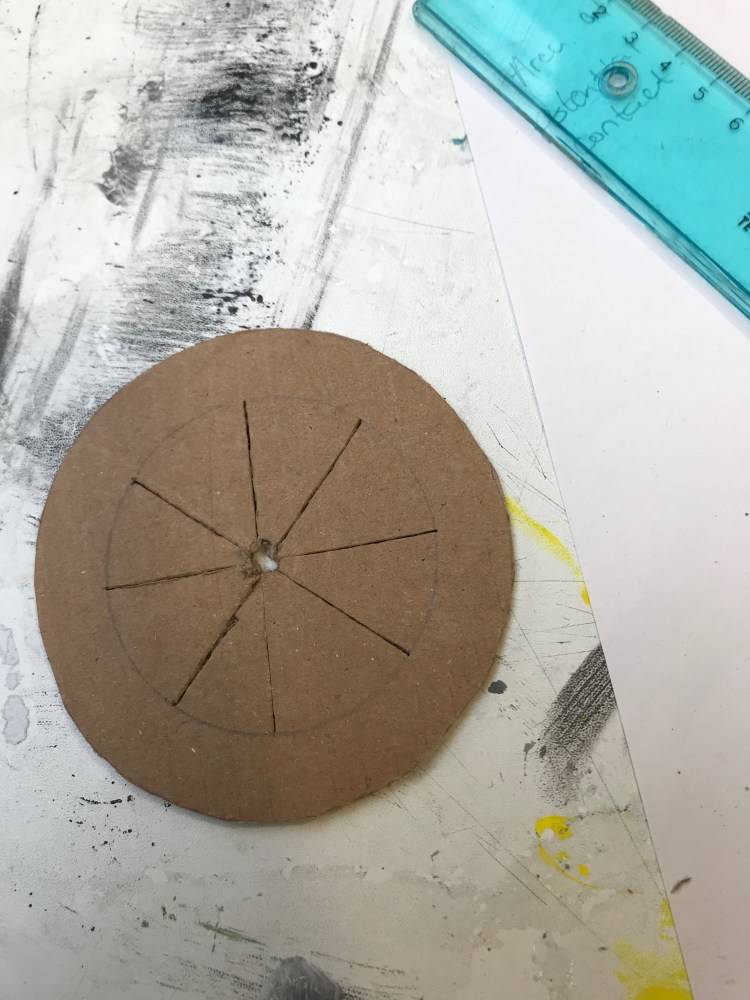
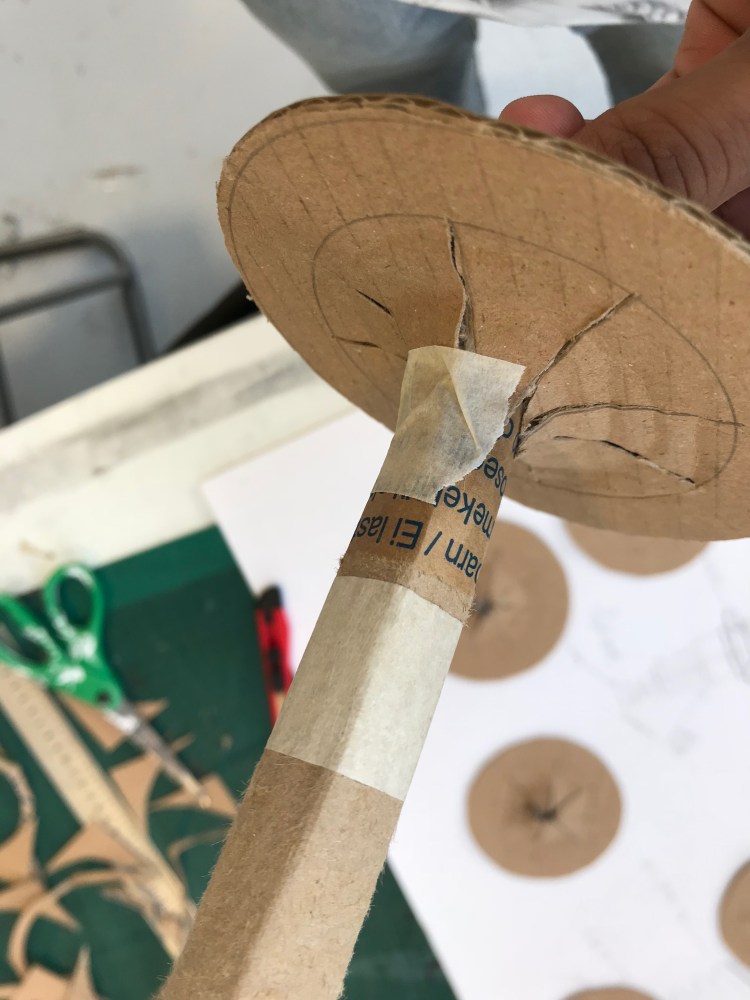
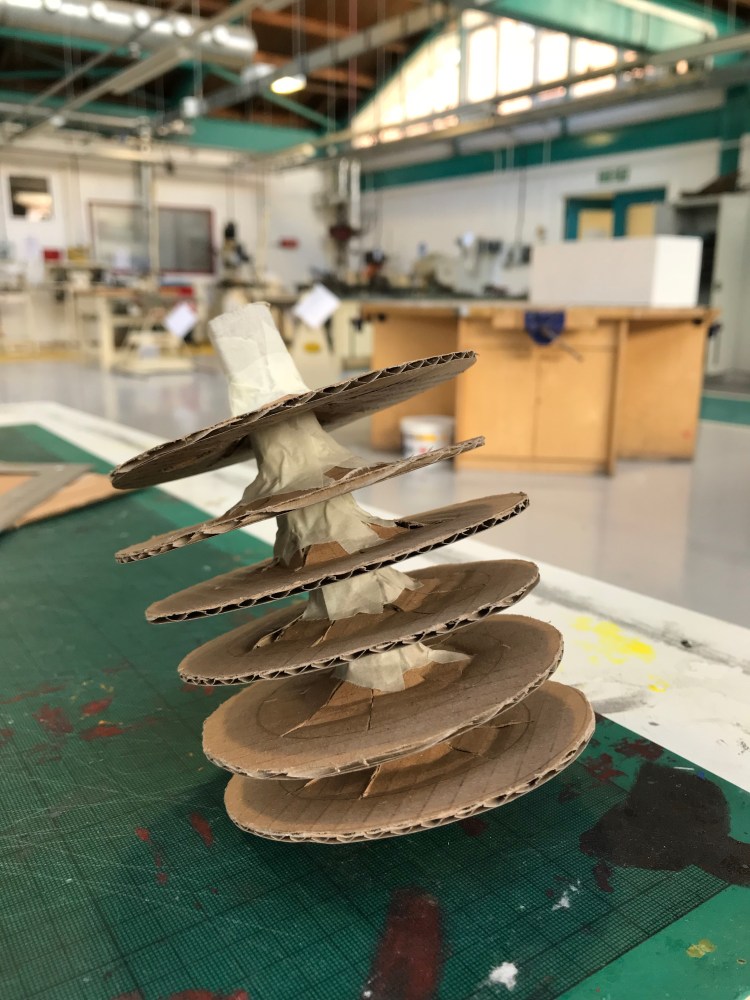
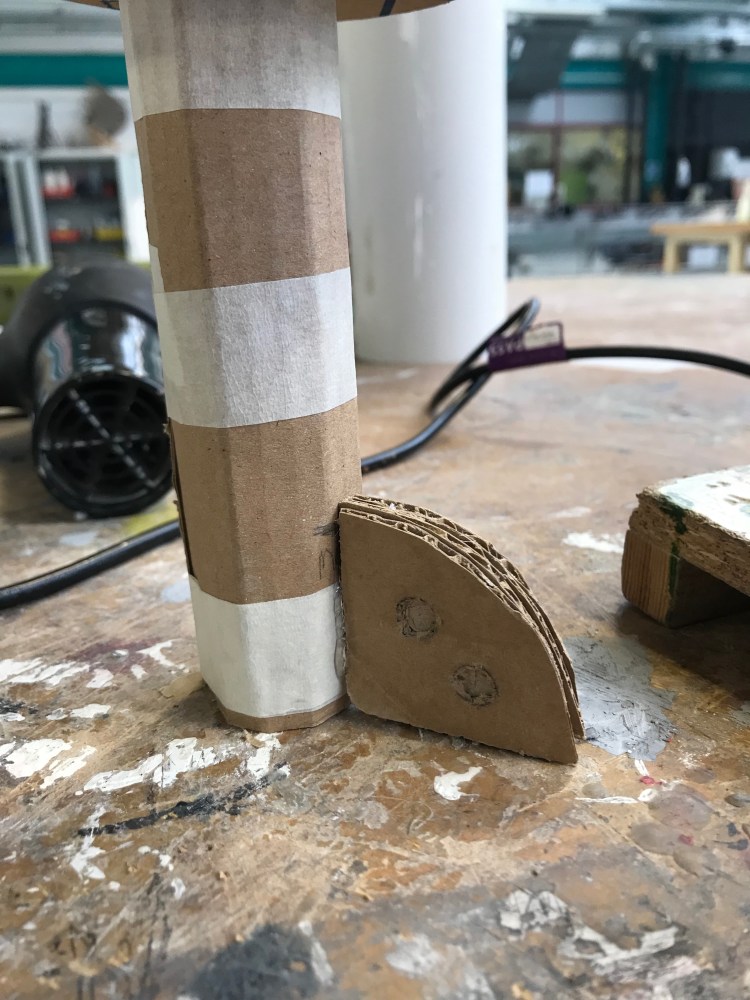
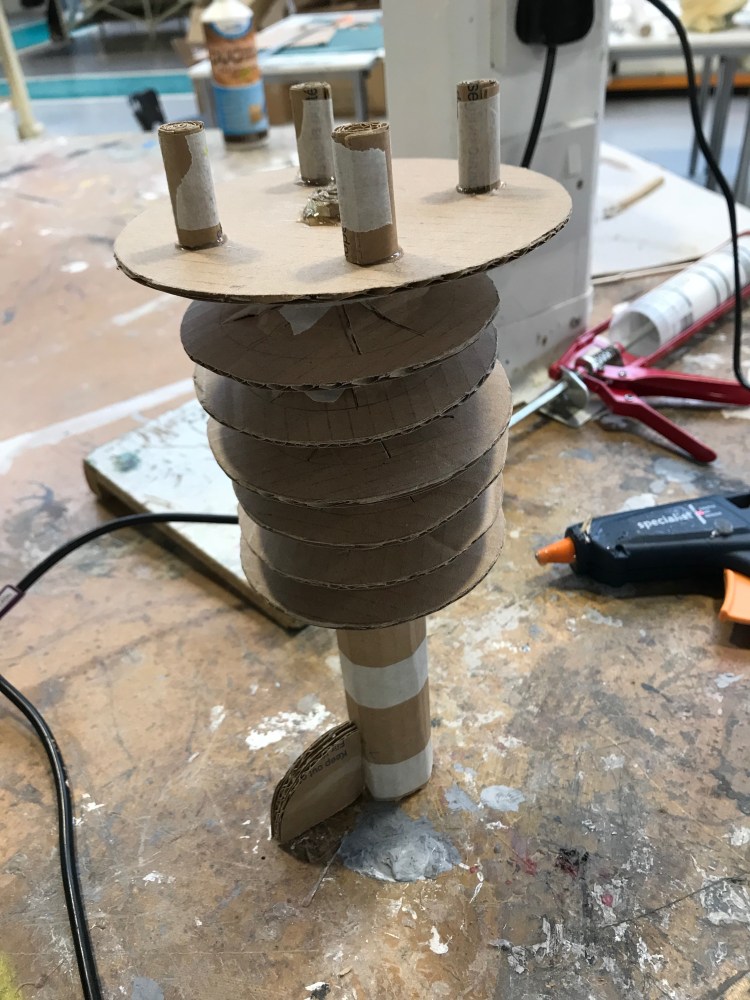
Using the pictures that I collected from my primary research, I decided to draw a piece of the suspension (shock absorber and spring) and a spark plug. From these two drawings I decided that I will create the suspension part because it looked to be the simplest and easiest to replicate because the spark plug is made of smaller parts and it’d be difficult to replicate this for a first attempt. When I came to collect materials, I decided to make this model out of cardboard because I had seen on video on YouTube of an artist creating a F1 car made of cardboard and could see that this material is very versatile.
After completing this model, I found that cardboard is very useful in creating this experiment because it showed that the material is very flexible as I used bend parts to secure it on the shock absorber section. As well as this I found that I can create detailed pieces using cardboard because it can come in different thicknesses and colours that some materials may not be able to do. For example, layers cardboard and cut out pieces of the layers to them fill to give the impression of bolts. From this I can see that cardboard can be used to create larger scale models with enough detail for the model to be recognisable. Moving forward I intend to experiment with replicating smaller parts with high amounts of detail.
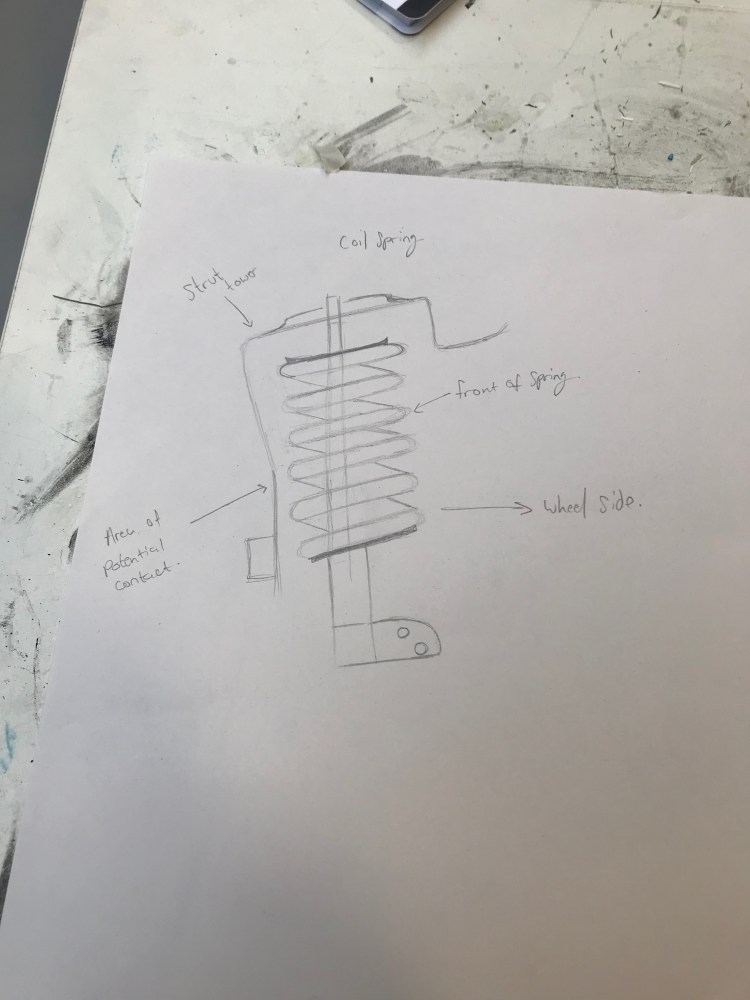
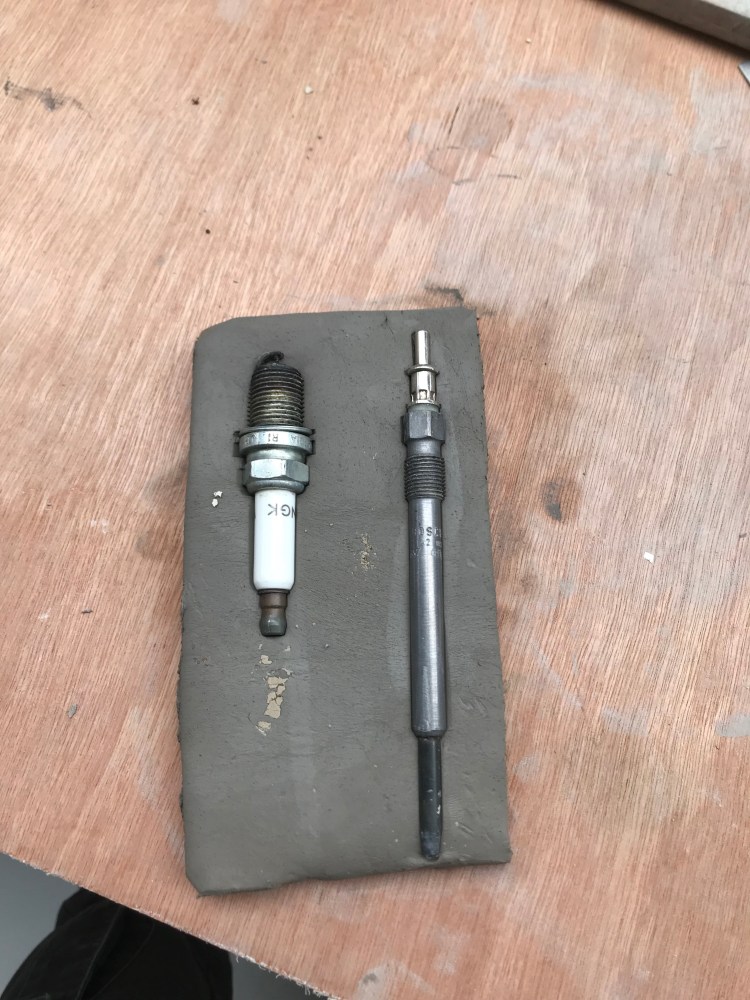
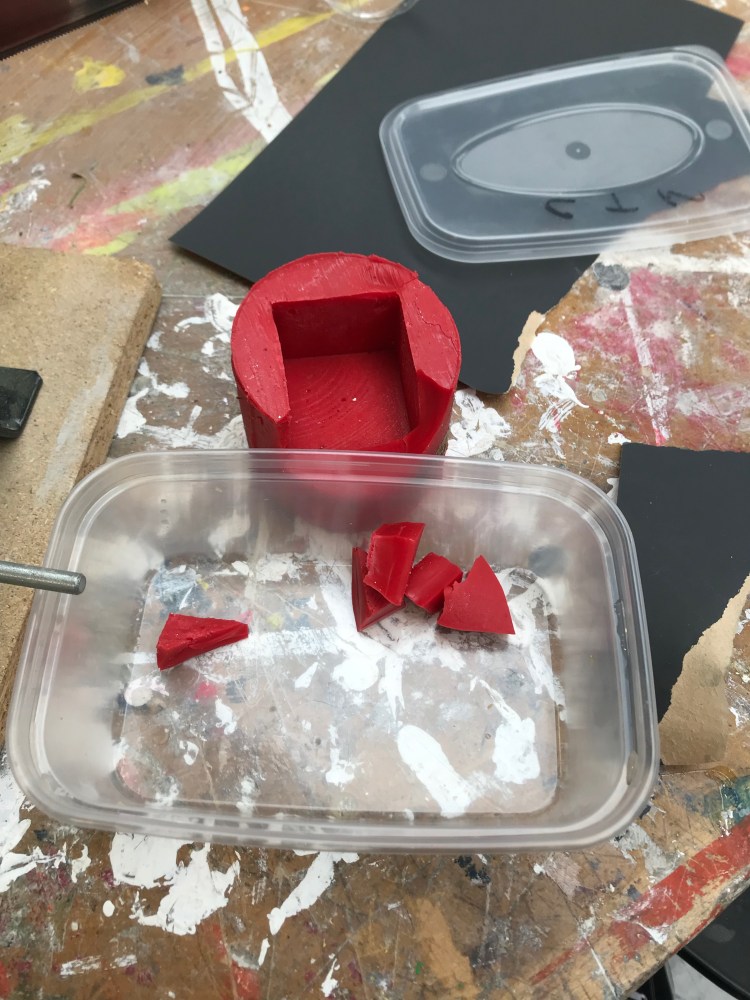
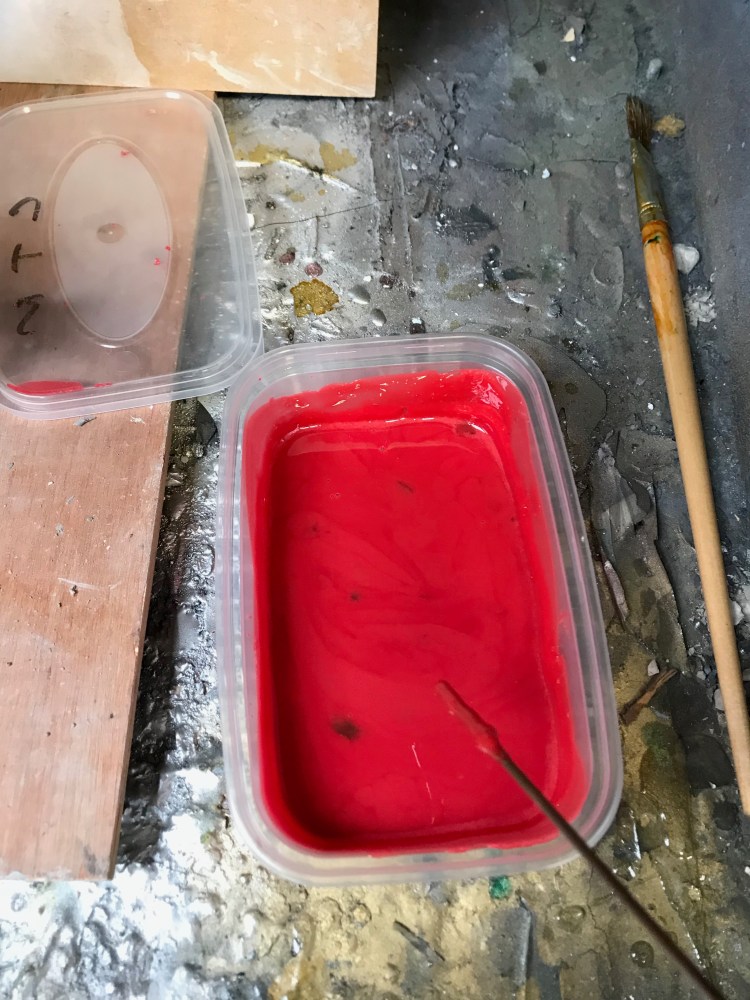
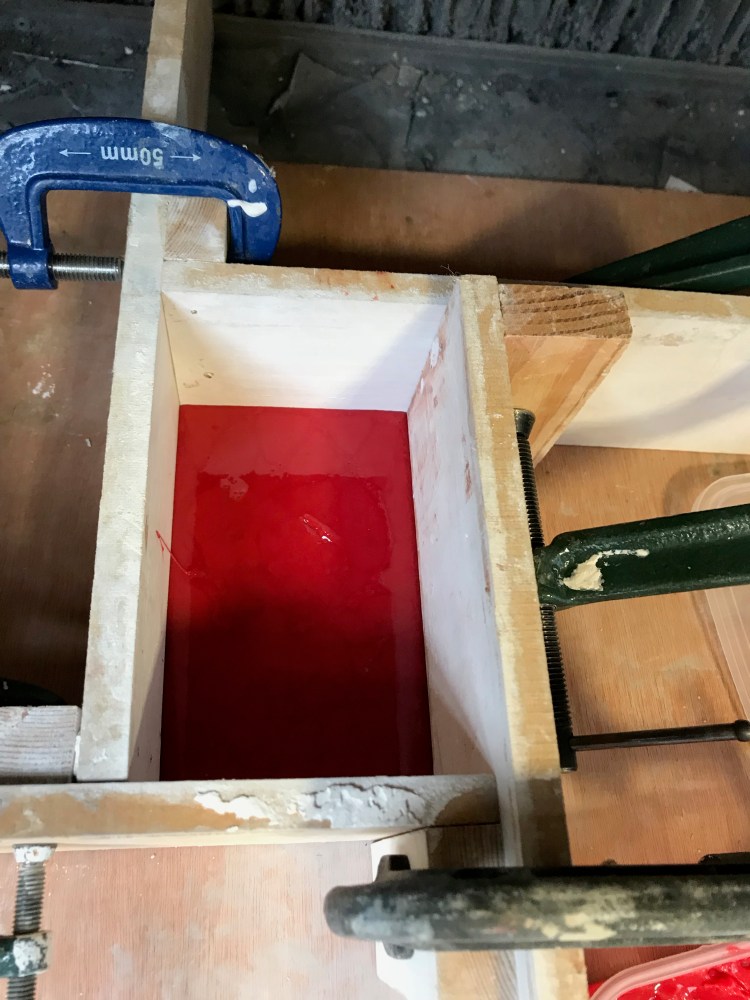
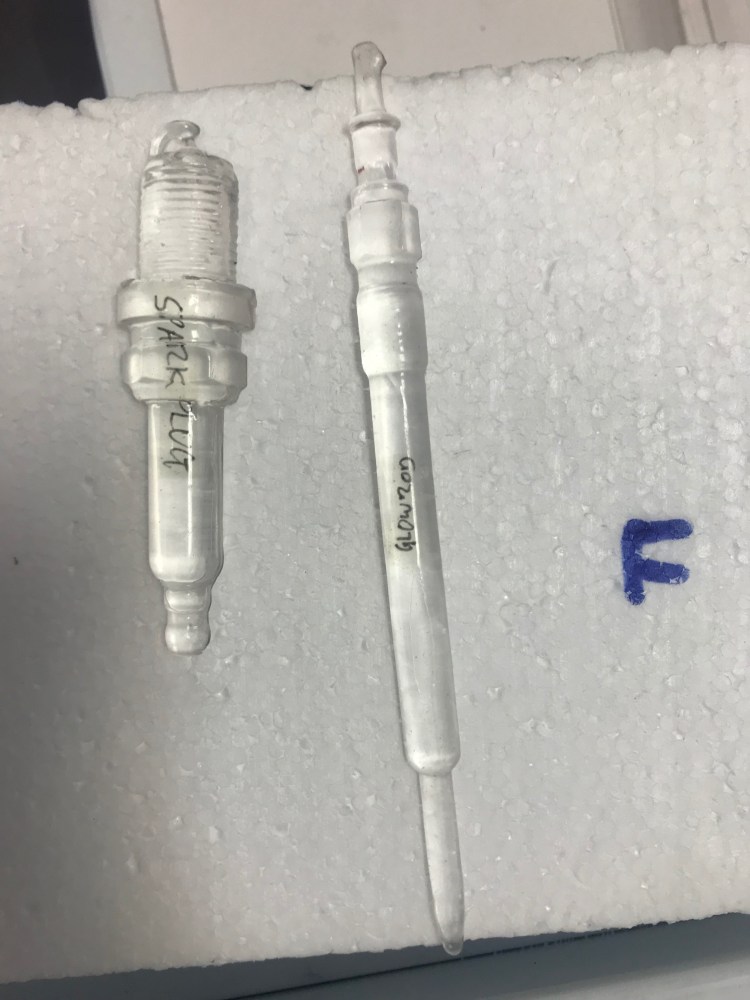
During this week I also wanted to experiment with replicating parts. The reason I would want to replicate part is because the final model would be symmetrical. To do this I experimented with resin casting. The first set was to create a model. I used the spark plugs I took from the garage and pressing them into clay with half of the subject exposed. I then put the clay in a jig and poured melted vinyl over the clay. When it dried I had perfect replica models. It was simple to mix the resin as it was 100ml of resin to 1ml of catalyst. After stirring it I poured this mixture into the model. When it dried it created identical replicas of what I wanted.
 Manifesto Project